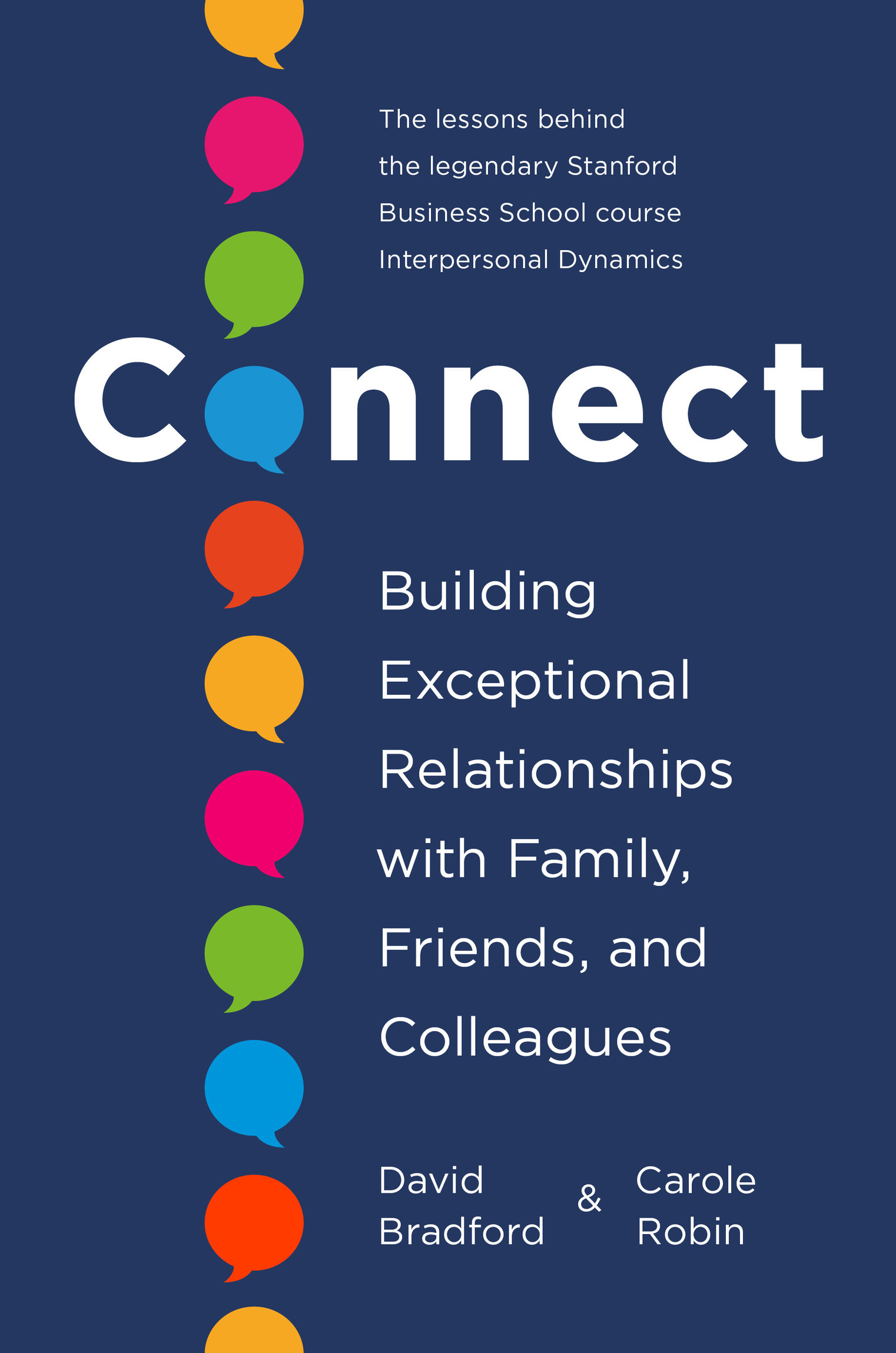
Connect - David Bradford, Ph.D.
## Metadata
- Author: **David Bradford, Ph.D.**
- Full Title: Connect
- Category: #books
## Highlights
- Social scientists call the belief in our ability to act in the world “having agency.” Too often, people think they have no choice in how to respond to what has happened to them. Throughout this book, you’ll see a variety of approaches that describe how we have more agency and can be more impactful than we initially think. This is an important mindset because moving to deeper, more meaningful, and exceptional relationships will require challenging choices. ([View Highlight](https://read.readwise.io/read/01k6dat9hjy0qah357qyj3c933))
- Being curious is a lot more complicated than it seems. At one end of the continuum, you truly don’t understand something at all, and at the other end, you think you know all about it and are just asking questions to test your hypothesis. A problem with the latter is that you’re probably not genuinely curious. You’ve largely made up your mind and are “leading the witness” to prove your case. That stance is unlikely to encourage the other to be more open and revealing. ([View Highlight](https://read.readwise.io/read/01k6dd60m5pa16nret72ahexc9))
- Not all questions are created equal, and asking the right kind can help encourage someone to share. Open-ended questions widen the scope of the conversation by generating options, new perspectives, or new ways of thinking about a situation. Ben did that when he asked Liam to explain what was going on at work and what bothered him so much about the situation. ([View Highlight](https://read.readwise.io/read/01k6dd5vxfms06w6w5mfq8seyb))
- Closed-ended questions, which usually can be answered with “yes” or “no,” narrow the conversation and are more likely to be felt as intrusive and judgmental. ([View Highlight](https://read.readwise.io/read/01k6dd5nd9d02f46e8w5zjes1g))