Maskness
A mental model for adjusting self-presentation, disclosure, and boundaries to the trust and stakes of a situation.
Maskness names the degree to which a person manages what others can see of their internal experience.
A thicker mask involves more deliberate editing of words, emotion, or behavior. A thinner mask allows more spontaneity and disclosure. These are positions on a dial that can change with the situation.
The useful question is whether the amount of self-presentation fits the context. Privacy, professional responsibility, and consideration for others can justify restraint. In a trusted relationship, the same degree of restraint may make an important conversation harder.
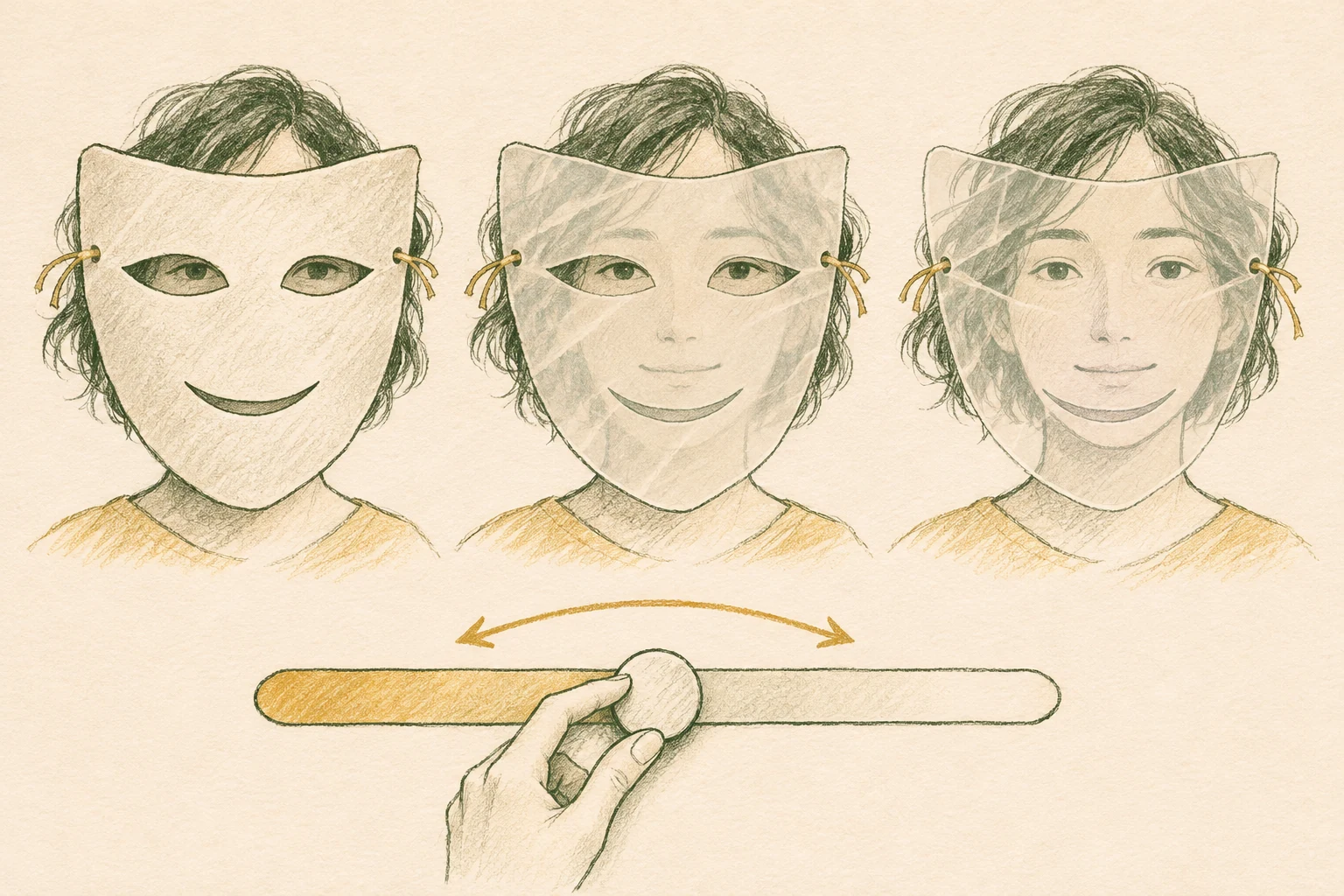
Adjust the setting to the context
| Context | What openness can allow | What restraint can protect | Calibration question |
|---|---|---|---|
| Close relationships | Honest needs, affection, and difficult conversations | The other person’s boundaries and capacity | Is something important being left unsaid? |
| Long-term friendships | Familiarity, play, and room to change | Privacy and the right not to discuss everything | Does the relationship allow an unscripted response? |
| Team collaboration | Clear concerns and enough warmth to work together | Professional duties and personal boundaries | What information would help the work or relationship? |
| Negotiation or public speaking | Credibility and a recognizable point of view | Confidential information and deliberate choices | Which details serve this exchange? |
| Strangers or a crowd | An ordinary, low-stakes interaction | Distance and freedom from unwanted disclosure | Is there any need to explain more? |
| Casual conversation | Curiosity and spontaneous participation | The option to keep it brief | Is the amount of rehearsal proportional to the stakes? |
How to use it
Notice what is being managed: words, emotion, the amount disclosed, or the impression being created. Identify what that management protects.
Check the setting against the present situation. A habit that serves a negotiation may be unnecessary with a trusted friend. More disclosure may also be unwelcome or unwise when the relationship lacks trust.
Choose a small adjustment and observe the result. That might mean expressing a preference directly, keeping a sensitive detail private, or allowing an ordinary answer without polishing it first.
Limits
Mask thickness does not measure honesty, character, or psychological health. Someone can disclose little and remain honest. Someone can appear spontaneous while misleading others. The model examines the fit between self-presentation and context; it cannot establish motives from appearance alone.
Watched vs seen adds the question of understanding: how accurate another person’s picture needs to be, and whether closing a particular gap is worth the effort.
The poem wear a mask for long enough and you become the mask explores the relationship between presentation and identity through metaphor. Language games considers the purposes and expectations that shape an interaction.
Further context
Related notes
- Watched vs seen frameworks Perception and self-presentation in the same interaction.
- wear a mask for long enough and you become the mask poetry A poetic exploration of the relationship between a mask and identity.
- Language games essays The purposes and expectations shaping an interaction.
- How I work and what I'm learning notes Communication, boundaries, and working with other people.
- Low Kolmogorov complexity human reverse engineering tool frameworks
Linked from
Topics