Watched vs seen
A mental model for distinguishing being perceived through someone else’s assumptions from being understood, and deciding which misunderstandings to address.
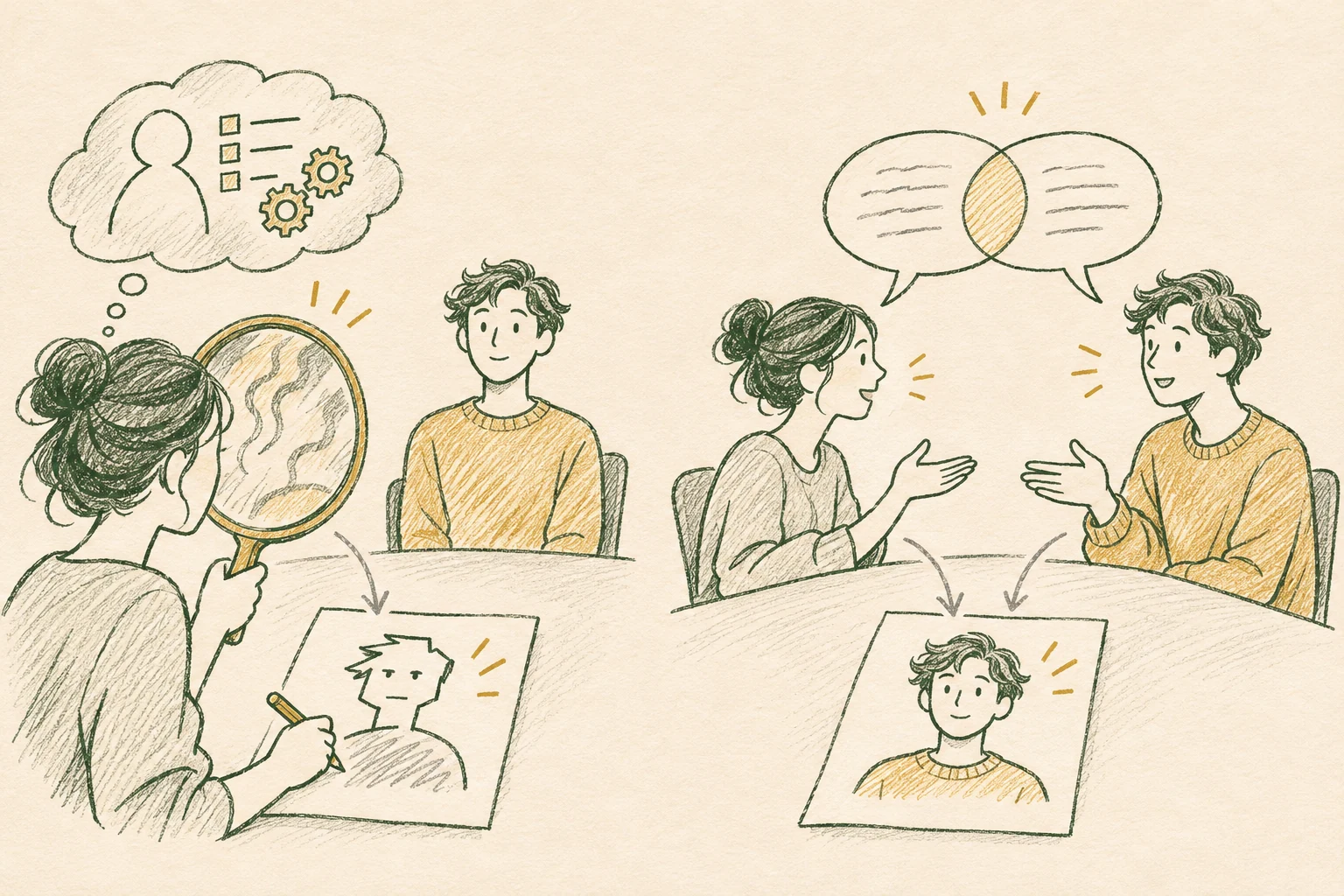
Being watched and being seen describe different kinds of attention in this model.
Watched: someone forms an impression using the information available and their existing assumptions.
Seen: their understanding is close enough to a person’s experience, intentions, and behavior to support meaningful recognition.
The distinction applies the map-and-territory idea to relationships. An impression is a map of a person. Being seen describes a useful degree of understanding, rather than complete knowledge of that person.
Which gaps are worth correcting?
Consider what a misunderstanding affects, how durable the relationship is, and whether better information could change the other person’s view.
| Context | Possible gap | What is at stake | Useful response |
|---|---|---|---|
| A stranger forms a passing impression | Little information is available | Often a brief encounter | Leave the impression incomplete unless clarification serves a concrete purpose |
| A close friend misreads an important change | An older picture no longer fits | Trust and a continuing relationship | Explain what changed and ask what they understood |
| A teammate misreads an intention | The action is visible; its purpose is missing | Coordination and future decisions | Clarify the intention and listen to the action’s effect |
| A reader misunderstands an argument | The explanation leaves a gap | Whether the idea communicates | Improve the explanation or address a specific objection |
| An audience treats a fragment as the whole person | Public information is incomplete | Privacy and the cost of managing impressions | Choose which information belongs in public |
| Feedback feels uncomfortable but specific | The observer may have noticed something real | Learning and self-correction | Test the feedback against behavior and evidence |
How to use it
- Name the actual misunderstanding. Separate what someone said or did from guesses about what they think.
- Identify the consequence. Would greater understanding change a decision, repair trust, or improve the relationship?
- Choose the amount of clarification that consequence deserves. A specific explanation may be enough.
- Check whether understanding improved. Repeating the same explanation indefinitely can consume attention without closing the gap.
Feeling understood can coexist with disagreement. A person’s self-image is also a model, so outside observations deserve consideration rather than automatic rejection.
Maskness covers a related choice: how much to reveal or manage in a particular context. This model concerns the understanding that results.
Inferential distance examines the missing background that can make an explanation hard to understand. AI merely learns a blurred map of the territory explores another case where a representation differs from what it represents.
Further context
Related notes
- Maskness frameworks Perception and self-presentation in the same interaction.
- Inferential distance essays Missing background can explain a gap in understanding.
- AI merely learns a blurred map of the territory essays How a representation differs from what it represents.
- Inner Scorecard for Personal Growth essays Choosing how much weight to give outside judgments.
- Never Split the Difference: Negotiating as if Your Life Depended on It book notes
Linked from
Topics